Celebrate 9 Years with EIMF
EIMF Has Assisted 6,000+ Professionals Get Certified
Ready for your next professional certification? Choose from 9 self-paced eLearning courses and enjoy a 30% discount!
*complete your purchase before 21 April 2024


Price range: €150.00 through €270.00
The EIMF Live Online Learning Experience
Participants will receive access to the recorded sessions of the course.
EIMF subject-matter experts deliver engaging and interactive courses across a broad spectrum of areas, that can be enjoyed in the comfort of your own chosen environment. Read more
Course Overview
This course provides EMI professionals with a comprehensive understanding of their AML/CFT and fraud prevention obligations under EU and national frameworks. It focuses on regulatory expectations, customer due diligence, institutional risk assessments, and the integration of AML and fraud controls in line with PSD2 requirements.
Through a practical and applied learning approach, participants will strengthen their ability to identify, assess, and mitigate ML/TF and fraud risks within their organizations. The programme also addresses the governance, oversight, and cultural dimensions of AML compliance, guiding participants on how to design proportionate controls and align internal procedures with supervisory expectations.
By the end of the course, participants will be equipped to implement effective risk-based frameworks, ensure regulatory compliance, and promote a culture of integrity and vigilance that supports both operational resilience and sustainable business growth.
Training Objectives
At the Knowledge Level, participants will be able to:
• Describe the AML/CFT framework and key obligations of EMIs.
• List the stages and components of an effective AML compliance programme.
• Identify main ML/TF and fraud typologies relevant to EMIs.
• Clarify the relationship between AML, fraud risk, and governance structures.
• Correlate AML obligations with customer risk management and transaction monitoring processes.
At the Skills Level, participants will be able to:
• Develop and implement proportionate AML and fraud controls.
• Perform business-wide and customer risk assessments (BWRA and CRA).
• Explain and justify due diligence and monitoring decisions.
• Organise reporting procedures for suspicious transactions and internal escalation.
• Justify risk-based thinking to strengthen internal governance and operational frameworks.
At the Attitudes Level, participants will be able to:
• Challenge weak compliance practices and promote accountability.
• Motivate colleagues to maintain a culture of integrity and vigilance.
• Defend the importance of ethical conduct in financial services.
• Appraise and evaluate the effectiveness of internal AML and fraud processes.
• Promote continuous improvement and readiness for supervisory inspections.
Training Outline
AML/CFT Regulatory Framework for EMIs
Business-Wide and Individual Risk Assessments (BWRA & CRA)
EMI-Specific ML/TF Risks and Red Flags
Fraud Risk Management
Transaction Monitoring and Reporting Obligations
Governance, Culture, and Oversight
Who Should Attend
CPD Recognition
This programme may be approved for up to 6 CPD units in Banking and Financial Regulation. Eligibility criteria and CPD Units are verified directly by your association, regulator or other bodies which you hold membership.
This training course may be approved as an external activity under the new ACAMS recertification category ”non-ACAMS credits” for up to 5 CPD units. Eligibility criteria and CPD Units are verified directly by the Association of Anti-Money Laundering Specialists (ACAMS). To read more about the non-ACAMS credits policies and eligibility criteria please click here.
In-house Training
For groups within the same organisation, this course may be customized to meet any specific needs and delivered in-house.
| Are you applying for the HRDA subsidy? | Yes, No |
|---|
Day 1:
Day 2:
Start time: 09:00 EEST
End time: 12:15 EEST
Venue: Live Online
Coordinates: 6 | Duration: 6 hrs
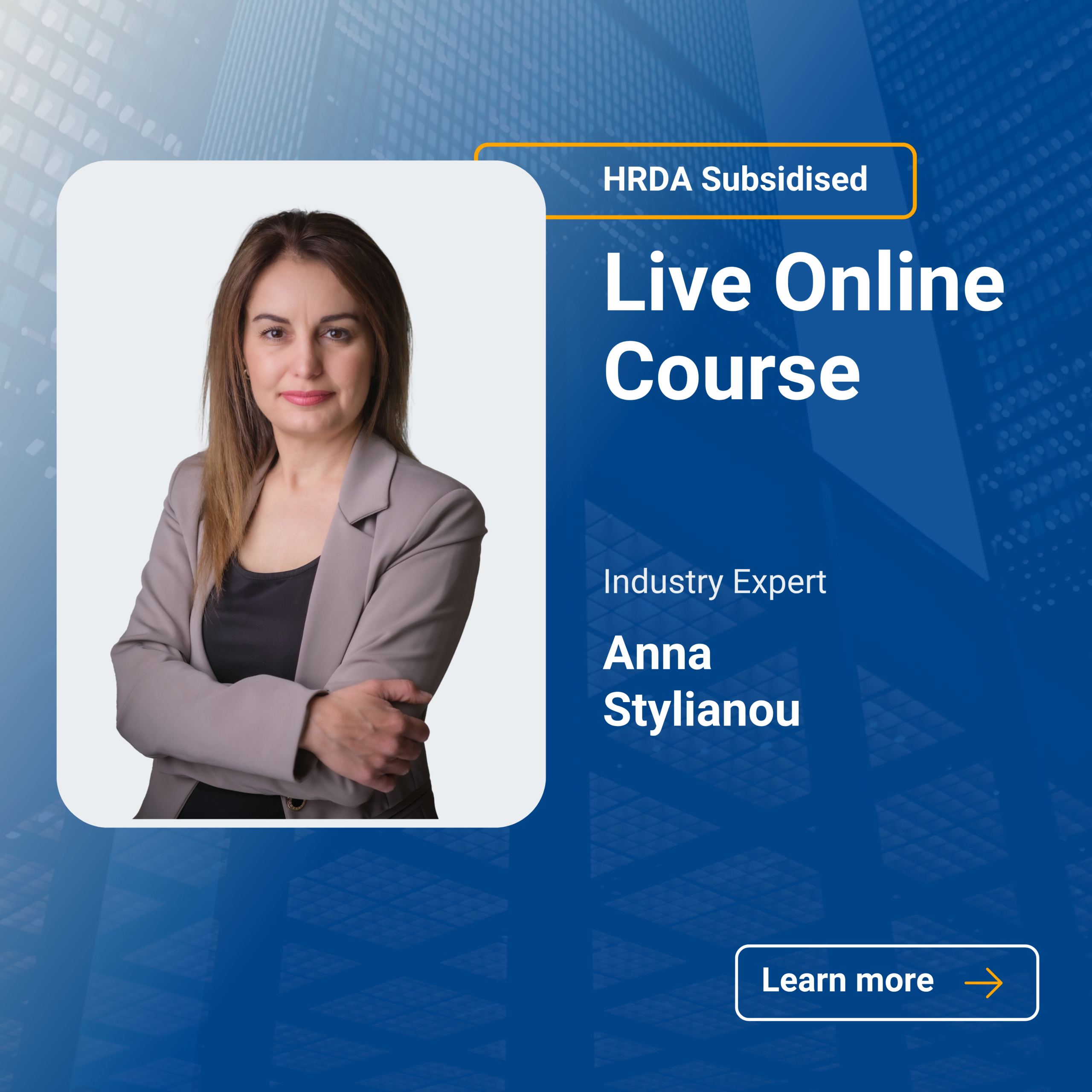
Directions: <a href="https://eimf.eu/event-organizer/anna-stylianou/">Anna Stylianou (view the trainer's bio here)</a>
Phone: +35722274470
Email: [email protected]
Venue: Live Online
CPD Units: 7 | Duration: 7 hrs
Venue: Live Online
CPD Units: 7 | Duration: 7 hrs

Venue: Live Online
CPD Units: 5 | Duration: 5 hrs

Venue: Live Online
CPD Units: 28 | Duration: 28 hrs