Celebrate 9 Years with EIMF
EIMF Has Assisted 6,000+ Professionals Get Certified
Ready for your next professional certification? Choose from 9 self-paced eLearning courses and enjoy a 30% discount!
*complete your purchase before 21 April 2024


The EIMF Live Online Learning Experience
Participants will receive access to the recorded sessions of the course.
EIMF subject-matter experts deliver engaging and interactive courses across a broad spectrum of areas, that can be enjoyed in the comfort of your own chosen environment. Read more
Course Overview
In today’s fast-paced and challenging workplace, developing resilience is key to not only surviving but thriving. This workshop is designed to equip participants with practical tools and strategies to navigate stress, challenges and setbacks successfully.
It has become increasingly crucial to adopt new techniques and skills to navigate the demands of our professional lives. One key aspect of thriving in this environment is building resilience, which involves developing the ability to bounce back from setbacks and adapt to change.
In this workshop, we’ll explore the concept of resilience and examine the impact of mindset on how we build our resilience. Additionally, we will delve into both long-term (macro) strategies and immediate (micro) strategies that can be implemented to enhance resilience in the workplace.
Training Objectives
In terms of Knowledge
In terms of Skills
In terms of Awareness/Attitude
Training Outline
Introduction
Setting the Context: Why we need new techniques in our modern and challenging workplace
Self-awareness
Self-regulation
Fuel and Purpose
Wrap up and close
Who Should Attend
Anyone who needs to develop/safeguard their well-being and resilience.
Training Style
The programme is designed to raise awareness of the importance of resilience and how this can be optimised in our high stress workplaces. It aims to heighten participants awareness, develop their skills and extend their tools in an interactive manner using power-point presentations, group discussions, small group exercises and reflective exercises.
Participants are encouraged to actively engage in the training, sharing their experiences, insights and questions throughout the training, allowing learning not only from the trainer’s content but also in the exchange between participants of their personal professional experiences.
CPD Recognition
This programme may be approved for up to 8 CPD units in Personal and Professional Development. Eligibility criteria and CPD Units are verified directly by your association, regulator or other bodies which you hold membership.
In-house Training
For groups within the same organisation, this course may be customized to meet any specific needs and delivered in-house.
Training Fee
€110.00 – €270.00
HRDA-approved seminars are exempted from VAT for eligible organisations applying for the HRDA subsidy. A 19% VAT will apply to seminars and participants who do not qualify for the HRDA subsidy.
| Are you applying for the HRDA subsidy? | Yes, No |
|---|
Day 1: June 30, 2026 | 09:00-13:15
Day 2: July 02, 2026 | 09:00-13:15
Start time: 09:00 EET
End time: 13:15 EET
Venue: Live Online
Coordinates: 8 | Duration: 8 hrs
Directions: <a href="https://eimf.eu/event-organizer/lefki-angeli/">Lefki Angeli (view the trainer's bio here)</a>
Phone: +35722274470
Email: [email protected]
Venue: Live Online
CPD Units: 8 | Duration: 8 hrs
Phone: +35722274470
Training Schedule
June 30, 2026 | 09:00-13:15
July 02, 2026 | 09:00-13:15
Industry Expert: Lefki Angeli (view the trainer's bio here)
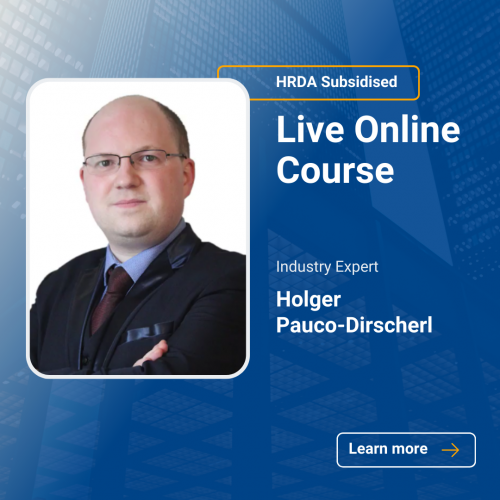
25 in stock
Start Date: 21 April 2026Venue: Live Online
CPD Units: 6 | Duration: 6 hrs
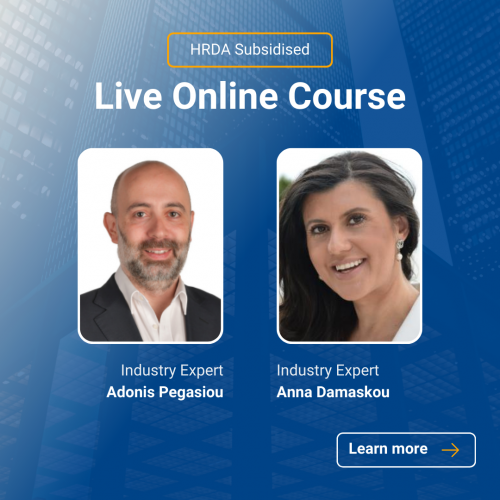
28 in stock
Start Date: 21 May 2026Venue: Live Online
CPD Units: 10 | Duration: 10 hrs
26 in stock
Start Date: 27 April 2026Venue: Live Online
CPD Units: 5 | Duration: 5 hrs
28 in stock
Start Date: 03 June 2026Venue: Live Online
CPD Units: 5 | Duration: 5 hrs
